Miami Springs Golf Review: I shot 89 on the Course Where Arnie Turned Pro
I walked onto the first tee at Miami Springs Golf & Country Club not knowing I was about to play the same fairways where Arnold Palmer took his first professional swing in 1954. Where Gene Sarazen won four times. Where Sam Snead captured five victories. Where Byron Nelson, Tommy Armour, and Jimmy Demaret all raised trophies.
That’s the thing about golf: sometimes the most significant rounds happen on courses you barely researched. I booked Miami Springs because it was close to the airport and I needed to catch a flight. What I discovered was a piece of golf history that’s been quietly welcoming players for over a century.
In this Miami Springs Golf Review I shot 89. My second-best round in months. On a course where legends were made.
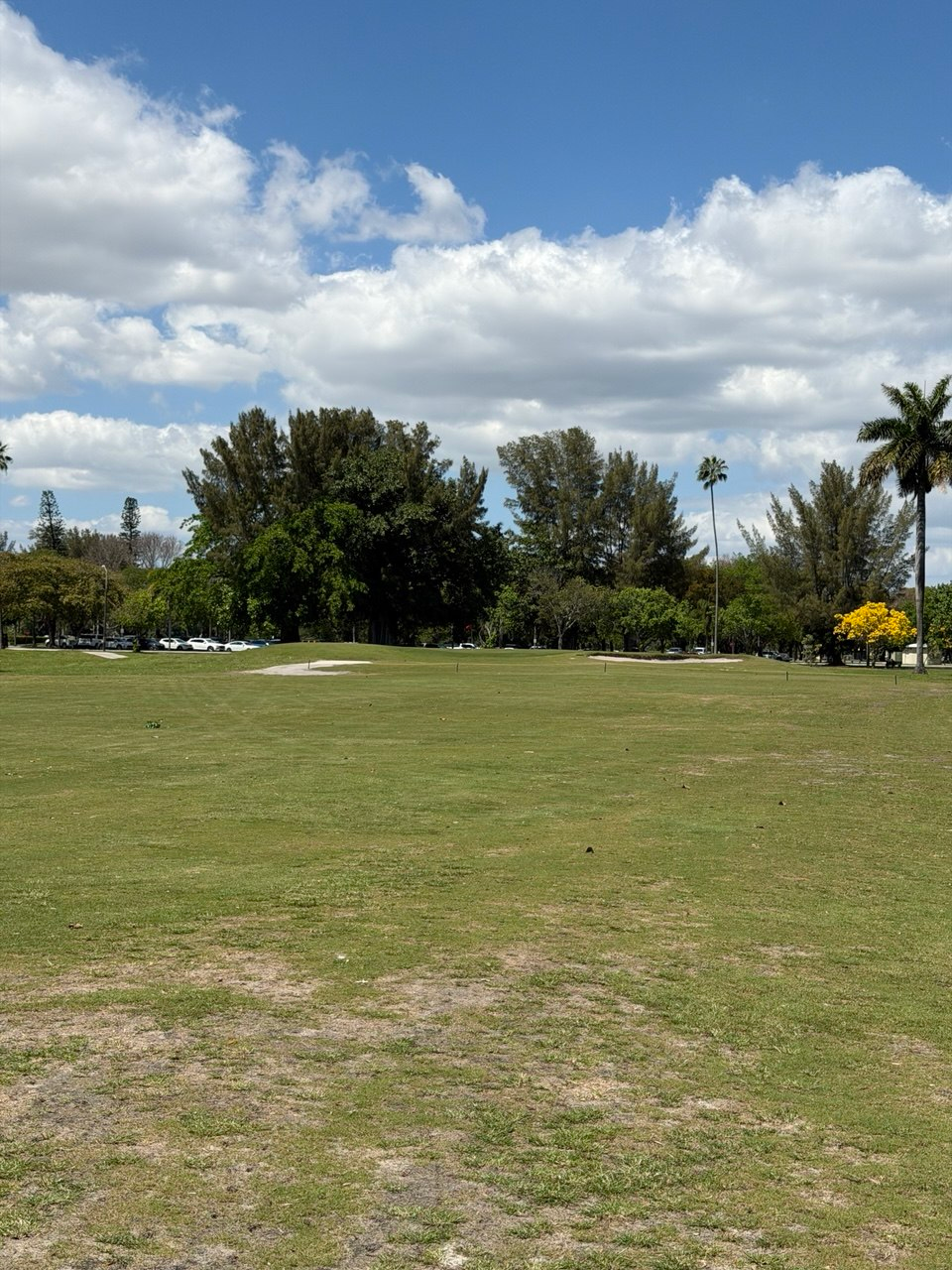 Miami Springs greenside bunkers
Walking in Giants’ Footsteps
Miami Springs Golf & Country Club isn’t just another municipal course. From 1924 to 1955, it hosted the Miami Open, a legitimate PGA Tour event that drew the game’s biggest names to South Florida long before Tour pros discovered Palm Beach and Doral.
The winner’s list reads like a who’s who of golf’s Golden Age:
- Gene Sarazen: Four wins (1926, 1928, 1929, 1930)
- Sam Snead: Five wins (1937, 1939, 1946, 1950, 1951, 1955)
- Byron Nelson: Two wins (1940, 1941)
- Tommy Armour: Two wins (1932, 1935)
- Jimmy Demaret, Jack Burke Jr., Doug Ford: All winners here
But here’s the detail that made me stop mid-backswing on the 10th tee: Arnold Palmer played his first round as a professional at the 1954 Miami Open at this very course. Shot 78-74. Twenty-four years old, just turned pro, grinding his way through qualifying for his first professional paycheck.
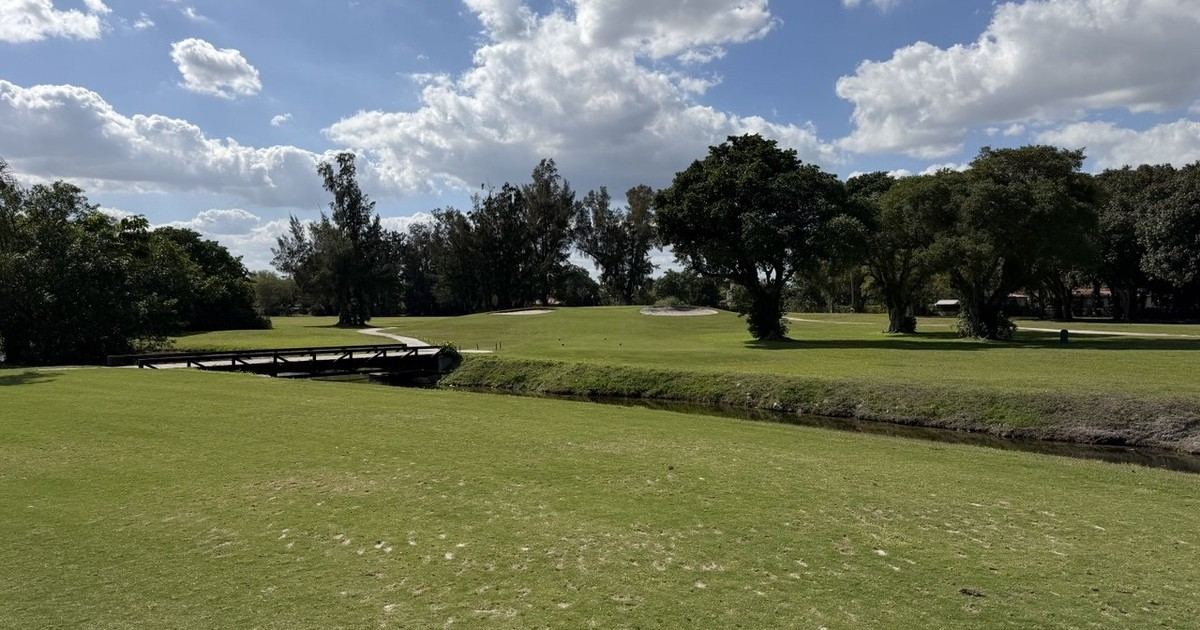
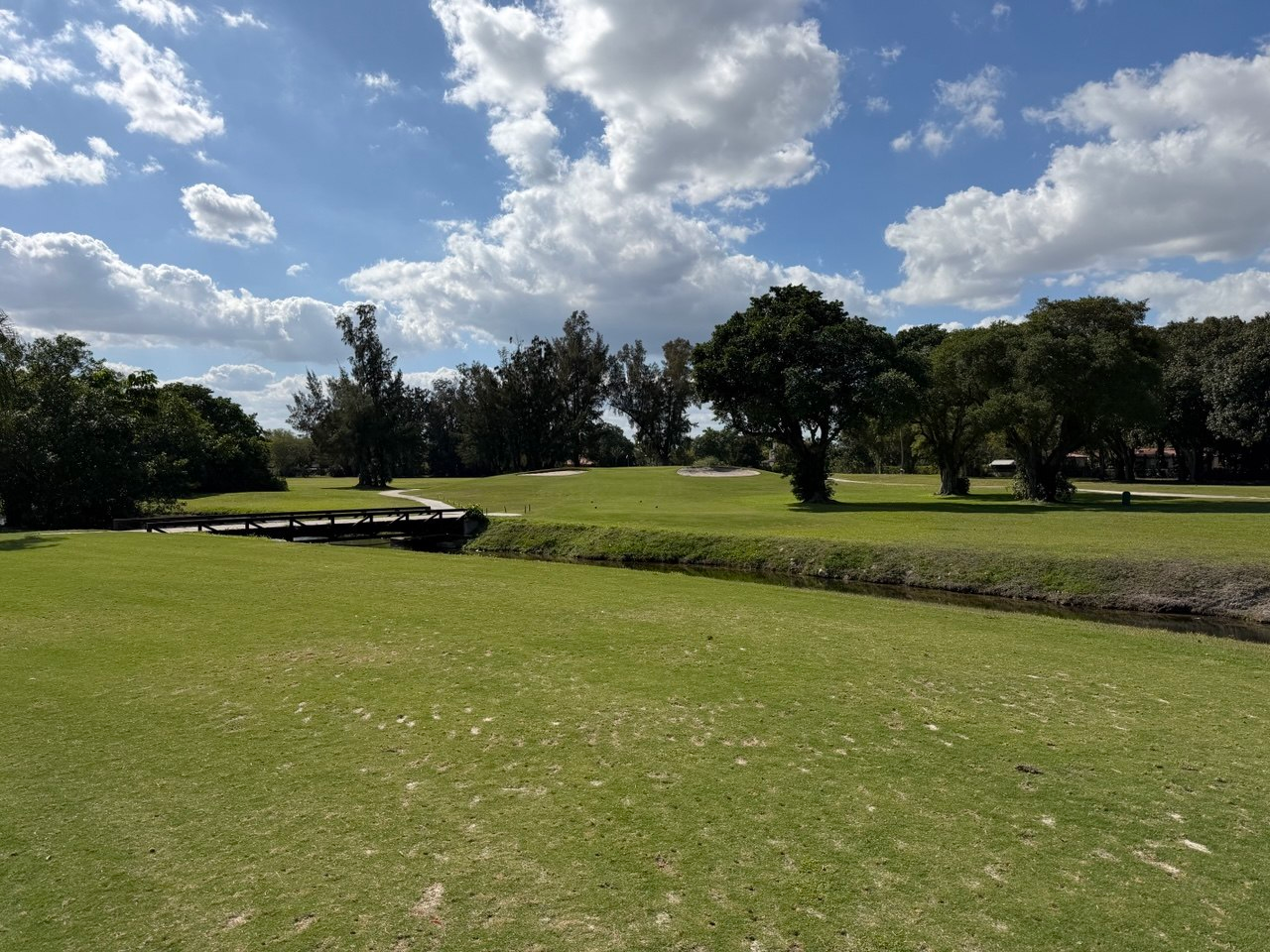 ms 09 bridge creek fairway
Think about that. The King’s professional journey started on these fairways. Every drive I hit, every putt I rolled. Arnie had been there first, nervous and hungry and probably wondering if he could make it as a pro.
The course is now part of the Florida Historic Golf Trail, and after spending 4.5 hours walking these grounds, I understand why history matters in golf. Every shot carries the weight of everyone who came before.
The Round That Hit Different
Miami Springs isn’t trying to be anything other than what it is: a classic Florida muni with tree-lined fairways, manageable distances from the blue tees (71.8/122), and enough character to keep you honest. Par 71 split evenly at 35/36, and playing at just over 6,600 yards, it’s not about overpowering you, it’s about execution.
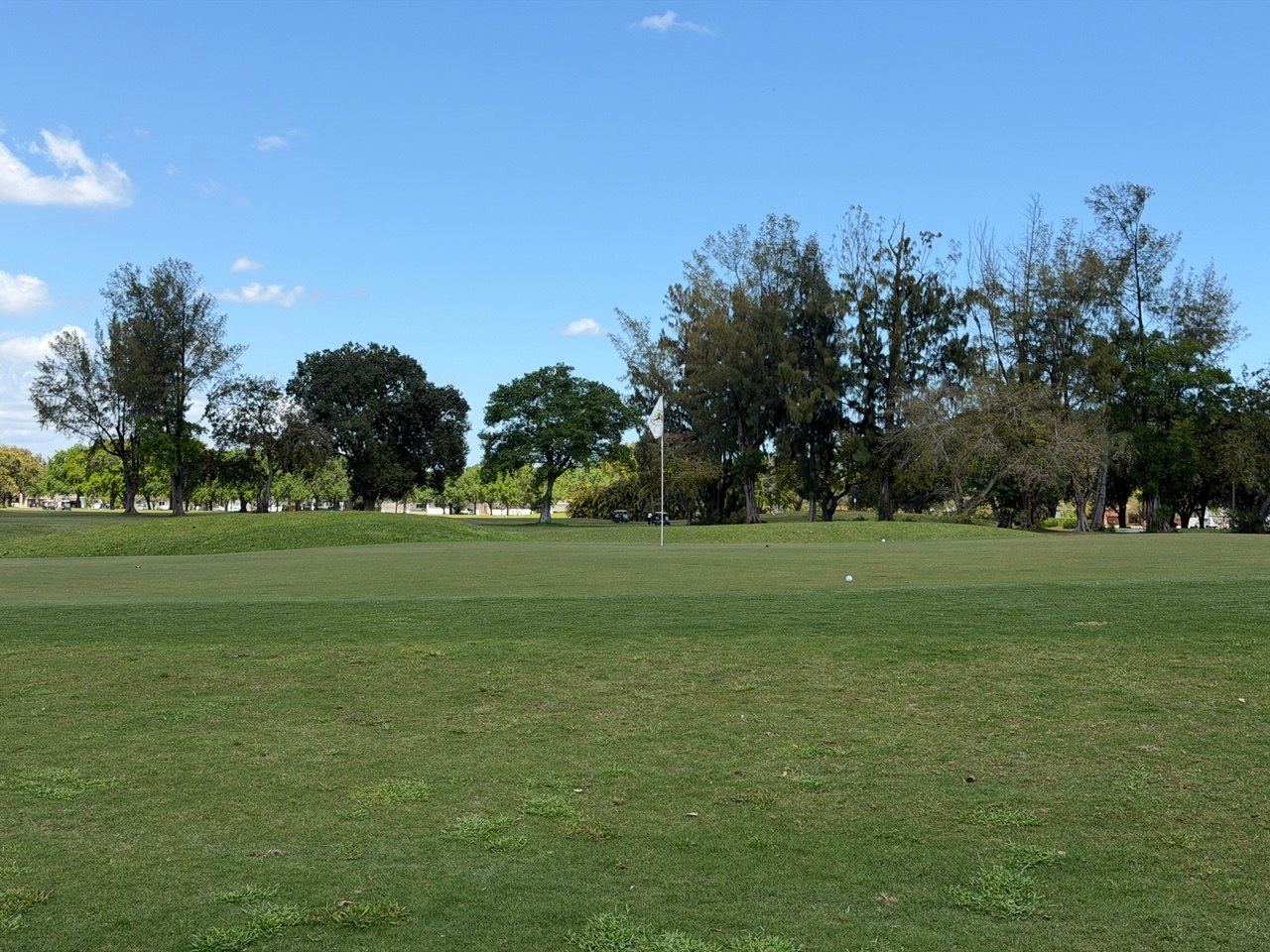 Miami Springs green
I teed off at 12:20, got paired with a couple of strangers who turned out to be great company (including one guy doing Fireball shots after his Denny’s Lumberjack Slam pre-round, don’t ask), and settled into one of the most consistent rounds I’ve played in months.
Front Nine: 44 (+9)
Started with a par on the opening hole, which always sets the right tone. Then I found my rhythm: bogey golf with the occasional par sprinkled in. Five bogeys, one par at the par-3 8th, and only one double on the par-3 4th where I got a bit aggressive with my wedge approach.
The consistency was the story. No blow-ups, no triples, no stretches where the wheels fell off. Just steady, boring, beautiful bogey golf.
Back Nine: 45 (+9)
Perfect mirror image of the front. Started with a par on 10, stayed in that same groove, and posted another 45. The only real hiccup was hole 13, a par 5 where I made 7 after getting too cute with my second shot. But even that didn’t derail anything, bounced back with a bogey on 14 and kept grinding.
Five pars total (holes 1, 8, 10, 12, 16), eleven bogeys, and just two doubles. That’s the formula when everything’s clicking: minimize disasters, find a few pars, and let consistency do the work.
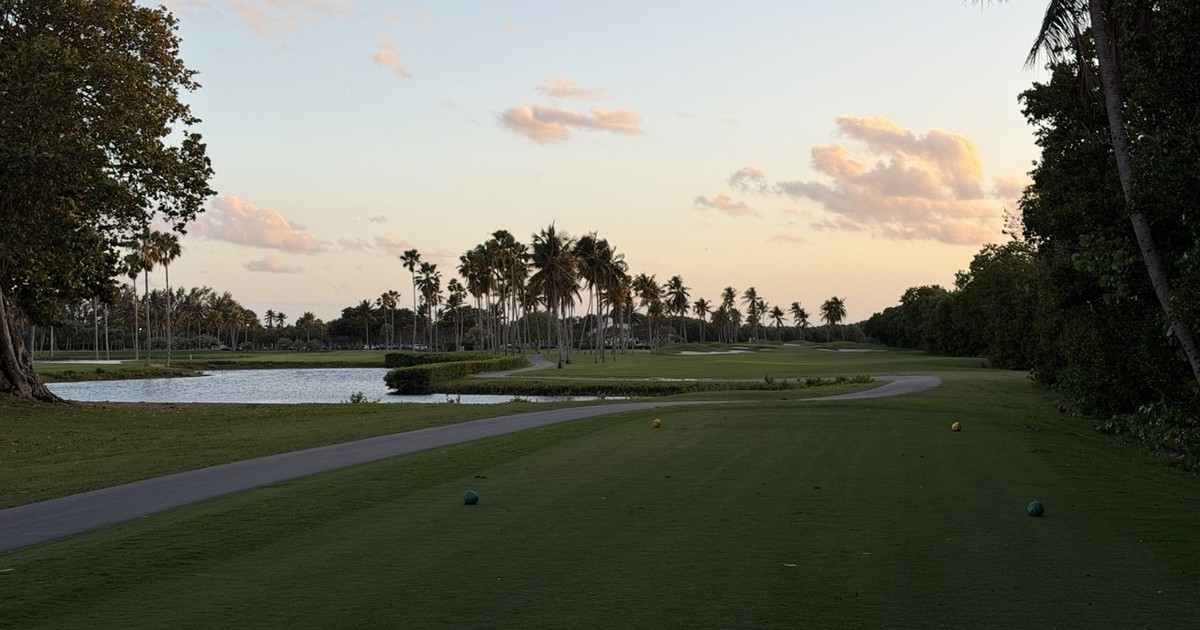
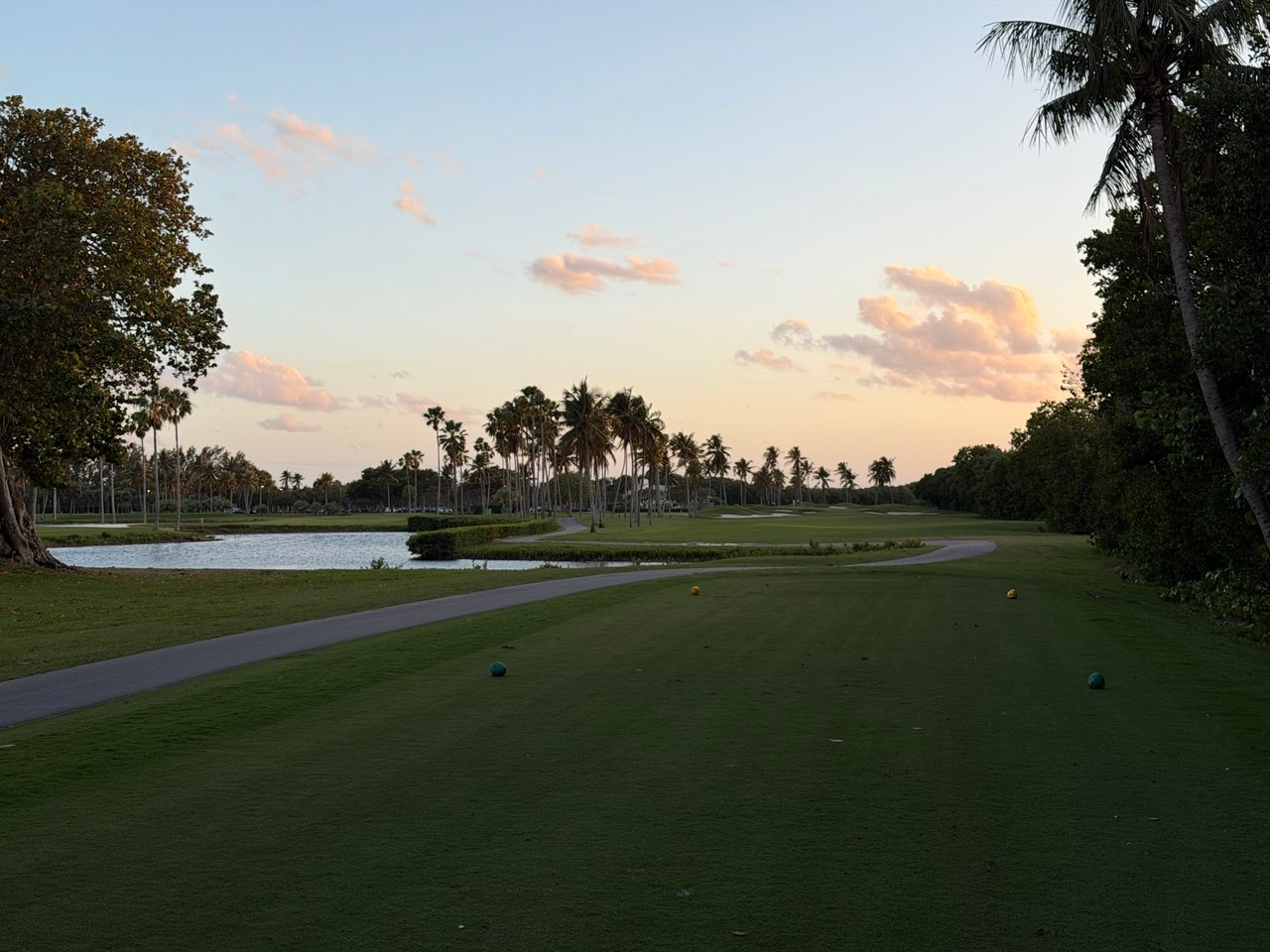
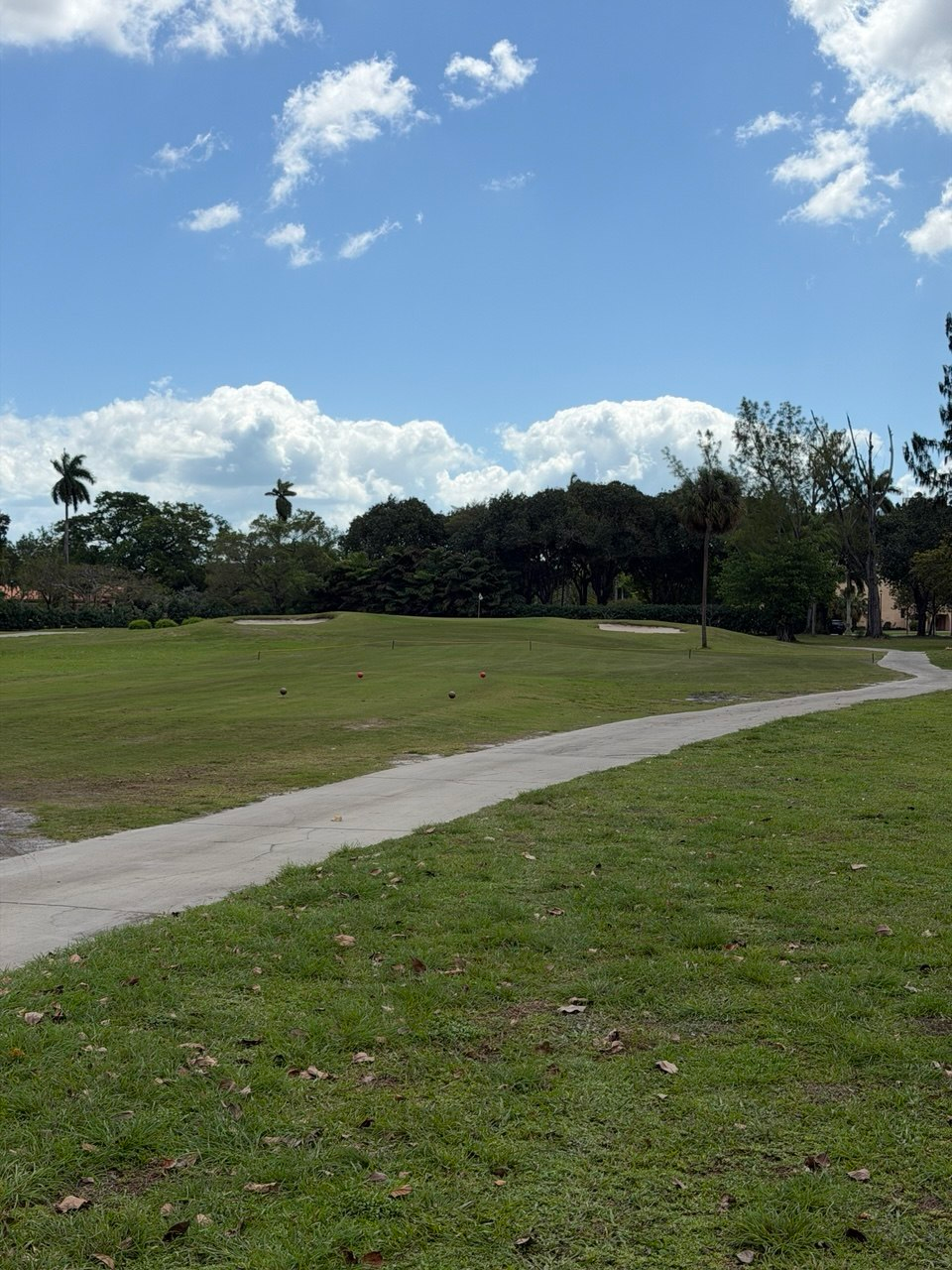 ms 03 tee box elevated green palms
The GolferHD
What struck me most was how well I drove the ball all day. No distance issues, no big misses, just solid contact and good course management. The Miami humidity was manageable, the flat layout was a nice change from Pittsburgh’s hills, and I felt like I was seeing the shots clearly before I hit them.
My chipping still needs work. I switched techniques a couple weeks ago and I’m not quite comfortable yet. But that’s the thing about this game: you’re always working on something. A thousand more chips and I’ll have that dialed in. The short game is the next frontier in my 5 by 50 journey.
This was my second round in Miami after shooting 94 at Crandon Park earlier in the trip. Five shots better is significant progress, especially considering how much more consistent this round felt. At Crandon, I had stretches where things got sideways. Here, I stayed in my lane and let the course come to me.
That’s growth. That’s what improvement actually looks like: not necessarily shooting career lows every time out, but finding more consistency in your baseline. Building a foundation you can count on.
The Social Power of Golf
One of my favorite parts of the round was getting paired with random strangers who turned out to be excellent company. There’s something magical about golf’s ability to bring together four people who’ve never met and create an instant bond over shared struggles with this impossible game.
We encouraged each other’s good shots, commiserated over bad breaks, and had genuine conversations walking between holes. That’s the social power of golf: total strangers becoming playing partners, connected by nothing more than our mutual love for chasing a little white ball around a big green space.
It reminded me why I fell in love with this game in the first place. Yes, the personal challenge matters. Yes, the technical improvement is addictive. But golf is fundamentally about human connection, whether it’s with friends you’ve known forever or strangers who become friends over 18 holes.
Looking Forward
With Pittsburgh’s weather finally starting to break and the season opening up, rounds like this build exactly the kind of confidence I need. The technical work is showing up: better ball-striking, smarter course management, more consistent scoring. My handicap index of 14.3 reflects this progress, and I can feel myself getting closer to single digits.
The 5 by 50 challenge isn’t just about reaching a 5 handicap before I turn 50. It’s about the process of continuous improvement, the discipline to keep working on weaknesses, and the patience to let progress compound over time. Rounds like Miami Springs, where everything felt controlled and manageable, prove the work is paying off.
I’m excited to get back to Pittsburgh, to apply these lessons on my home course, and to keep building momentum through what’s shaping up to be a breakthrough season. Golf’s taught me that improvement comes in waves, and I can feel another one building.
The Takeaway
Miami Springs Golf & Country Club won’t make anyone’s list of must-play courses in South Florida. It’s not trying to. But for $89 and 4.5 hours on a Saturday afternoon, it delivered everything I needed: a fair test, good company, and a reminder that golf history lives in the most unexpected places.
I shot 89 on a course where Arnold Palmer began his professional journey. Where Sam Snead perfected his swing. Where Byron Nelson found his rhythm. That connection to golf’s past made every shot feel more significant, every par a little sweeter.
Sometimes the best rounds happen when you’re not trying to be perfect, when you’re just trying to play good, solid golf and let the course reveal itself to you. Miami Springs did exactly that, and I walked off the 18th green feeling like I’d discovered something special.
Visit the official website to book your own round, or learn more about the course’s fascinating history on the Florida Historic Golf Trail. Trust me, this place has stories to tell.
FAQ: Miami Springs Golf & Country Club
Q: What tees should I play from?
A: The blue tees (71.8/122) are very playable for most golfers. At just over 6,600 yards, it’s not about length, it’s about accuracy and course management. The slope rating of 122 makes it more approachable than many resort courses.
Q: How much does it cost to play?
A: Green fees vary by season and time of day, but expect to pay around $65 for 18 holes including cart. It’s excellent value for a course with this much history and character.
Q: What’s the best time to book?
A: Being close to Miami International Airport, it’s perfect for travel golf. Book morning times if you want to avoid the afternoon heat, or afternoon rounds if you need to make a flight. The 4.5-hour pace was comfortable and never felt rushed.
Q: Is the course walkable?
A: Absolutely. The flat Florida terrain makes for an easy walk, and several of the historical champions would have walked these fairways. If you enjoy walking golf and want to connect with the course’s history, I’d recommend it.
Q: What makes this course historically significant?
A: Miami Springs hosted the Miami Open (PGA Tour event) from 1924-1955. Arnold Palmer played his first professional round here in 1954, and legends like Sam Snead (5 wins), Gene Sarazen (4 wins), Byron Nelson, and Tommy Armour all won tournaments on this course. It’s a legitimate piece of golf history that’s still accessible to everyday golfers.